Evolutionary Data Mining and Machine Learning Workshop
12-15 November 2026, Shenyang, China
Data mining and machine learning is an important research area and has become increasingly popular in various fields, such as security, engineering, sciences, finance, marketing, and healthcare. Data mining and machine learning cover a wide range of problems and tasks such as dimensionality reduction, classification, and regression that need effective techniques/algorithms to solve.
Evolutionary computation is a sub-field of artificial intelligence that includes a family of nature-inspired population-based algorithms/techniques. Evolutionary computation techniques have promising global search ability to find high-quality solutions to problems without requiring rich domain knowledge. Existing evolutionary computation paradigms include genetic algorithms (GAs), genetic programming (GP), evolutionary programming (EP), evolution strategies (ES), learning classifier systems (LCS), particle swarm optimization (PSO), ant colony optimization (ACO), differential evolution (DE), evolutionary multi-objective optimization (EMO), and memetic computing (MC).
Evolutionary computation techniques have been successfully applied to solve many learning and optimization problems in data mining and machine learning, including classification, regression, clustering, dimensionality reduction, feature analysis, and visualization. However, the potential of evolutionary computation has not been comprehensively explored. Many problems in data mining and machine learning have not been well solved and the use of evolutionary computation may bring new ideas and solutions. On the other hand, evolutionary computation techniques require the development of representations, operators, fitness measures, and search mechanisms to well solve data mining and machine learning problems. In recent years, the topic of evolutionary data mining and machine learning has become increasingly important and has attracted much attention from researchers and practitioners all over the world. It is clear that there is a growing interest in utilizing evolutionary computation to address challenging tasks in data mining and machine learning.
The theme of this workshop is the use of evolutionary computation for data mining and machine learning, covering ALL different evolutionary computation paradigms and their applications to data mining and machine learning.
The aim of this workshop is to investigate both the new theories and methods in different evolutionary computation paradigms on data mining and machine learning. This workshop will bring together researchers and practitioners from around the world to discuss the latest advances in the field and will act as a major forum for the presentation of recent research.
Authors are invited to submit their original and unpublished work to this workshop. Topics related to all aspects of evolutionary computation for data mining and machine learning, such as theories, algorithms, systems, and applications, are welcome.
Topics of interest include but are not limited to:
Each workshop will solicit papers (max 8 pages plus 2 extra pages) for peer review. Please follow the IEEE ICDM 2026 Paper Submission Web Site to prepare the manuscript.
All submissions will be refereed by experts in the fields and ranked based on the criteria of originality, significance, quality, and clarity. By the unique ICDMW tradition, all accepted workshop papers will be published in the dedicated ICDMW proceedings published by the IEEE Computer Society Press.
The workshop submission link is IEEE ICDM Workshop 2026 Paper Submission Web Site. Please choose Number 14: Evolutionary Data Mining and Machine Learning (EDMML) to submit your workshop paper. Thanks!
3:50 pm-4:00 pm - Opening Remarks
4:00 pm-4:40 pm - Invited Talk: Performance Predictor in Evolutionary Deep Learning: Methods and Applications
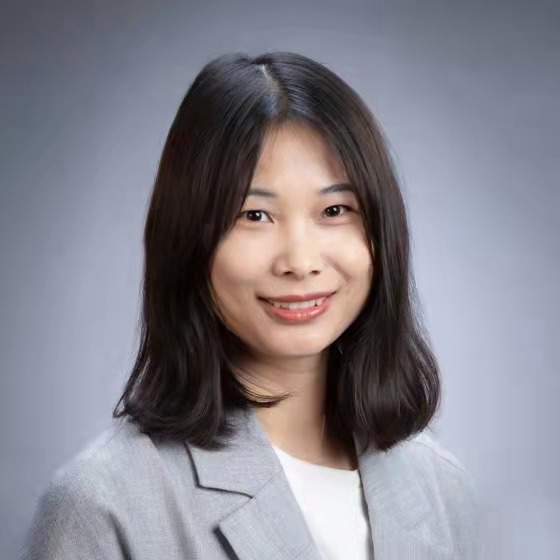
Presenter: Dr. Nan Li
4:40 pm-5:00 pm -Paper Presentations: Data-Driven Mixed-Space Control for Evolutionary Feature Selection and Hyperparameter Optimisation
Authors: Igor Masich, Alexey Borodulin, Vadim Tynchenko, and Ivan Malashin
5:20 pm-5:40 pm - Paper Presentations: Search-Space Reduction in Neural Architecture Search: Does It Help or Just
Authors: Sergei Kurashkin, Vladimir Nelyub, Aleksei Borodulin, and Vadim Tynchenko
5:40 pm-6:00 pm - Paper Presentations: Boltzmann Distribution-Based Genetic Algorithm for VLSI Circuit Partitioning
Authors: Daria Zaruba and Elmar Kuliev
6:00 pm-6:20 pm - Paper Presentations: ASDA: Adversarial Sensing-Driven Augmentation via Latent Feature Mining for Low-Resource Harmful Content Detection
Authors: Xiang Zhou, Shengli Gan, Xingyu Lu, Yumeng Ma, Junwei Li, Yanbing Liu, and Chunrong Tan
6:20 pm-6:40 pm - Paper Presentations: MSTAN: Multi-Scale Temporal Adjacency Network for Traffic Flow Prediction
Authors: Da Li, Xiujuan Xu, Guanghui Li, Yu Liu, Donghang Han, and Xiaowei Zhao
6:40 pm-6:50 pm- Closing Remarks
Title : Performance Predictor in Evolutionary Deep Learning: Methods and Applications
Abstract: Evolutionary deep learning can automatically optimize neural architectures, model configurations, and learning strategies. However, evaluating each candidate through full training is computationally expensive, making performance evaluation a major bottleneck in the evolutionary process. Performance predictors address this problem by estimating candidate quality before full evaluation. Using architecture representations and previously evaluated samples, predictors can guide selection, ranking, and environmental survival, allowing evolutionary algorithms to concentrate on promising candidates. They have been applied to evolutionary neural architecture search, multi-objective model optimization, hyperparameter optimization, and resource-aware network design. This report introduces the main construction and utilization methods of performance predictors, discusses their role in improving evolutionary search efficiency, and presents representative applications. It also highlights future opportunities in transferable prediction, multimodal architecture representation, uncertainty estimation, and interpretable performance prediction.
Dr. Nan Li (Master's Supervisor) is with the School of Artificial Intelligence and the Institute of Big Data Science and Industry, Shanxi University. He was selected for the Doctoral Young Talent Support Program of the China Association for Science and Technology (CAST). His research interests mainly include Automated Machine Learning, Neural Architecture Search, and Performance Predictors. He has published over 30 papers in leading journals and conferences, including ACM CSUR, IEEE TEVC, IEEE TFS, IEEE TCYB, IEEE TNNLS, NeurIPS, ICML, and IJCAI. His publications include 5 ESI Highly Cited Papers, 1 ESI Hot Paper, and 3 Research Frontier Papers. He is also the first author of the Springer monograph Performance Predictor in Evolutionary Neural Architecture Search: Methods and Applications, the first academic book dedicated to performance predictors in evolutionary neural architecture search. He currently serves as Associate Editor of Complex & Intelligent Systems and Editorial Board Member of Mathematics and Computer Science. He has also served as Guest Editor for Automated Software Engineering and CMC–Computers, Materials & Continua, and as Special Issue Associate Editor for the Journal of Xi’an University of Posts and Telecommunications. He has organized special sessions and workshops for BIBM 2026, ICME 2026, IJCNN 2026, IJCNN 2025, CEC 2025, DOCS 2025, and ICCVIT 2025, and serves as a Program Committee member for IJCNN, CEC, ICDM, ICML, and IJCAI. He has served as a reviewer for more than ten IEEE Transactions journals and for top-tier conferences including ICML, CVPR, ICLR, NeurIPS, AAAI, and ECCV. He is a Committee Member of the Technical Committee on Computational Intelligence and Applications of CAA, and a member of CAA and CCF. His research achievements have been recognized by the Bilingual Communication Project for Scientific Journals, and the Outstanding Paper Award of the Journal of Shaanxi Normal University (Natural Science Edition).
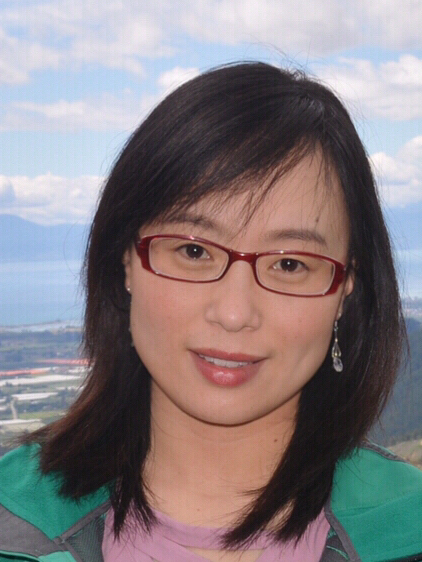
Ying Bi is currently a distinguished professor with the School of Electrical and Information Engineering at Zhengzhou University, China. Her research focuses mainly on data mining, machine learning, computer vision, evolutionary computation, classification, image analysis, feature learning, and transfer learning. She has published an authored book and over 60 papers in fully refereed journals and conferences in evolutionary computation and machine learning.
She is a member of IEEE, IEEE Computational Intelligence Society (CIS), and the Association for Computing Machinery (ACM). She is the vice-chair of the IEEE Computational Intelligence Society Task Force on Evolutionary Computer Vision and Image Processing and a member of the IEEE Computational Intelligence Society Task Force on Evolutionary Computation for Feature Selection and Construction. She has been serving as an organizing committee member of IEEE CEC 2019 and Australasian AI 2018, the workshop chair of IEEE CEC 2024, the student affairs chair of GECCO 2023 and GECCO 2024, a guest editor of the journals of Applied Soft Computing, Memetic Computing and Algorithms, the organizer of the workshop on EDMML in IEEE ICDM 2023-2021 the organizer of the special sessions in IEEE WCCI/CEC 2023-2022, IEEE SSCI 2022, IEEE SSCI 2021, and IDEAL 2021. Dr Bi has been serving as a program committee member for over ten international conferences, including IJCAI, GECCO, IEEE CEC, IEEE SSCI, and Australian AI. She is a co-chair of the poster session at IEEE CEC 2019. She is serving as a reviewer of over ten international journals, including IEEE Transactions on Cybernetics and IEEE Transactions on Evolutionary Computation.Bing Xue is currently a Professor of Artificial Intelligence and Program Director of Science in the School of Engineering and Computer Science at VUW. She has over 200 papers published in fully refereed international journals and conferences, and her research focuses mainly on evolutionary computation, data mining, machine learning, classification, symbolic regression, feature selection, evolving deep neural networks, image analysis, transfer learning, and multi-objective machine learning. Dr Xue is currently the Chair of the IEEE CIS Task Force on Transfer Learning & Transfer Optimization, Vice-Chair of the IEEE Task Force on Evolutionary Feature Selection and Construction, and of the IEEE CIS Task Force on Evolutionary Deep Learning and Applications. She was the Chair of the IEEE Computational Intelligence Society (CIS) Data Mining and Big Data Analytics Technical Committee.
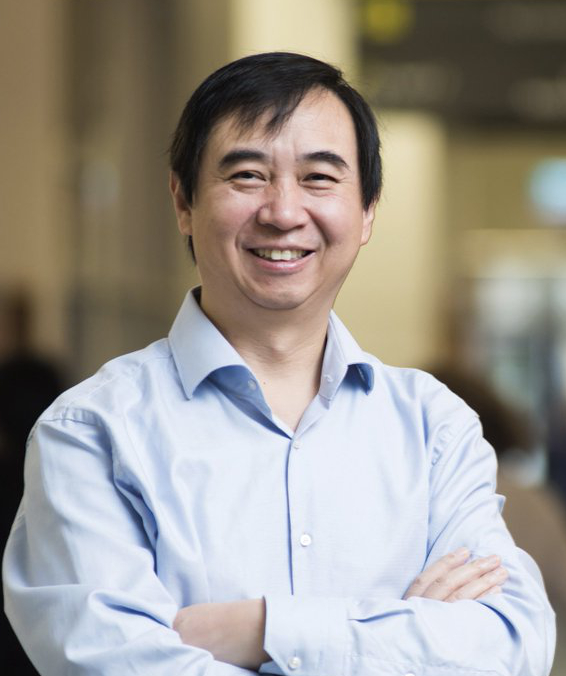
Prof. Xue is the organizer of the special session on Evolutionary Feature Selection and Construction at the IEEE Congress on Evolutionary Computation (CEC) 2015, 2016, 2017, 2018, 2019, 2020, 2021, and 2022. Prof. Xue has been a chair for many international conferences, including the Chair of Women@GECCO 2018, a co-chair of the Evolutionary Machine Learning Track for GECCO 2019 and 2020, and a co-chair of the first Neuroevolution Track for GECCO 2021 and 2022. She is the Lead Chair of IEEE Symposium on Computational Intelligence in Feature Analysis, Selection, and Learning in Image and Pattern Recognition (FASLIP) at SSCI 2016, 2017, 2018, 2019, 2020, 2021, and 2022, a Program Co-Chair of the 7th International Conference on Soft Computing and Pattern Recognition (SoCPaR2015), a Program Chair of the 31st Australasian Joint Conference on Artificial Intelligence (AI 2018), Finance Chair of 2019 IEEE Congress on Evolutionary Computation, a Workshop Chair of 2021 IEEE International Conference on Data Mining (ICDM), a Conference Activities Chair of 2021 IEEE Symposium Series on Computational Intelligence (IEEE SSCI 2021), a General Co-Chair of the 35th International Conference on Image and Vision Computing New Zealand (IVCNZ 2020), a Tutorial Co-Chair of 2022 IEEE World Congress on Computational Intelligence (IEEE WCCI 2022), a Publication Co-Chair of Proceedings of the 25th European Conference on Genetic Programming (EuroGP 2022), a Conference Chair of 2024 IEEE Congress on Evolutionary Computation. She is an Editor of the IEEE Computational Intelligence Society Newsletter. She is an Associate Editor or Member of the Editorial Board for over ten international journals, including IEEE Transactions on Evolutionary Computation, IEEE Computational Intelligence Magazine, IEEE Transactions on Artificial Intelligence, IEEE Transactions on Emerging Topics in Computational Intelligence, and ACM Transactions on Evolutionary Learning and Optimization.Mengjie Zhang is a Fellow of the Royal Society of New Zealand, a Fellow of IEEE, a Fellow of Engineering New Zealand, an IEEE CIS Distinguished Lecturer, and currently a Professor of Computer Science at Victoria University of Wellington, where he heads the interdisciplinary Evolutionary Computation Research Group. He is a member of the University Academic Board, a member of the University Postgraduate Scholarships Committee, Associate Dean (Research and Innovation) in the Faculty of Engineering, and Chair of the Research Committee of the Faculty of Engineering and School of Engineering and Computer Science.
His research is mainly focused on evolutionary computation, particularly genetic programming, particle swarm optimization, and learning classifier systems, with application areas of feature selection/construction and dimensionality reduction, computer vision and image processing, evolutionary deep learning and transfer learning, job shop scheduling, multi-objective optimization, and clustering and classification with unbalanced and missing data. He is also interested in data mining, machine learning, and web information extraction. Prof. Zhang has published over 700 research papers in refereed international journals and conferences in these areas. He has been serving as an associate editor or editorial board member for over 10 international journals, including IEEE Transactions on Evolutionary Computation, IEEE Transactions on Cybernetics, the Evolutionary Computation Journal (MIT Press), ACM Transactions on Evolutionary Learning and Optimization, Genetic Programming and Evolvable Machines (Springer), IEEE Transactions on Emergent Topics in Computational Intelligence, Applied Soft Computing, and Engineering Applications of Artificial Intelligence, and as a reviewer of over 30 international journals. He has been a major chair for eight international conferences. He has also served as a steering committee member and a program committee member for over 80 international conferences, including all major conferences in evolutionary computation. Since 2007, he has been listed as one of the top ten world genetic programming researchers by the GP bibliography (http://www.cs.bham.ac.uk/~wbl/biblio/gp-html/index.html). He was the Tutorial Chair for GECCO 2014, an AIS-BIO Track Chair for GECCO 2016, an EML Track Chair for GECCO 2017, and a GP Track Chair for GECCO 2020 and GECCO 2021. Since 2012, he has been co-chairing several parts of IEEE CEC, SSCI, and EvoIASP/EvoApplications conferences (he has been involved in major EC conferences such as GECCO, CEC, EvoStar, and SEAL). Since 2014, he has been co-organizing and co-chairing the special session on evolutionary feature selection and construction at IEEE CEC and SEAL and has also delivered a keynote/plenary talk for IEEE CEC 2018, IEEE ICAVSS 2018, DOCSA 2019, IES 2017, and the Chinese National Conference on AI in Law 2017. Prof. Zhang is the Chair of the IEEE CIS PhD Dissertation Award Committee and IEEE CIS Publication Strategic Planning Committee. He was the Chair of the IEEE CIS Intelligent Systems Applications, the IEEE CIS Emergent Technologies Technical Committee, and the IEEE CIS Evolutionary Computation Technical Committee; a Vice-Chair of the IEEE CIS Task Force on Evolutionary Feature Selection and Construction, the IEEE CIS Task Force on Evolutionary Computer Vision and Image Processing, and the IEEE CIS Task Force on Evolutionary Deep Learning and Applications; and also the founding chair of the IEEE Computational Intelligence Chapter in New Zealand.
For additional info please contact us Ying.Bi@ecs.vuw.ac.nz.